
Choosing a rehab center is one of the most consequential decisions in addiction recovery — and most people make it under stress, with limited time. According to a 2023 study in the Journal of Substance Abuse Treatment, patients who used a structured evaluation process were 40% more likely to complete their program than those who picked the first available facility.
This 12-point checklist comes from SAMHSA placement guidelines, ASAM (American Society of Addiction Medicine) criteria, and analysis of what separates effective programs from ineffective ones. Use it before signing intake paperwork.
What Should You Verify Before Choosing a Rehab Center?
Check three credentials first: SAMHSA listing, state license, and accreditation. If a facility fails any of these three, look elsewhere. The other 9 criteria below help you compare among legitimate options.
1. SAMHSA Verification
SAMHSA (Substance Abuse and Mental Health Services Administration) maintains the official federal database of licensed treatment facilities. Every facility in the RehabPulse directory is sourced from this database. If a facility is not listed in SAMHSA's treatment locator, it may be operating without proper credentials.
2. State Licensing
Every state requires addiction treatment facilities to hold a current license — typically issued by the state's Department of Health, Department of Behavioral Health Services, or Substance Abuse Authority. Ask for the license number and verify it on your state's licensing board website. License lookup is free and takes 2 minutes.
3. CARF or Joint Commission Accreditation
Accreditation is voluntary but signals quality. CARF International (Commission on Accreditation of Rehabilitation Facilities) and The Joint Commission are the two recognized accrediting bodies for behavioral health. Accredited facilities undergo periodic on-site reviews of clinical practices, safety protocols, and patient outcomes. Roughly 40% of US treatment facilities are accredited.
What Treatment Methods Should the Facility Use?
Look for evidence-based therapies — not "proprietary methods" or "unique approaches." The four modalities with the strongest research backing in addiction medicine are:
\n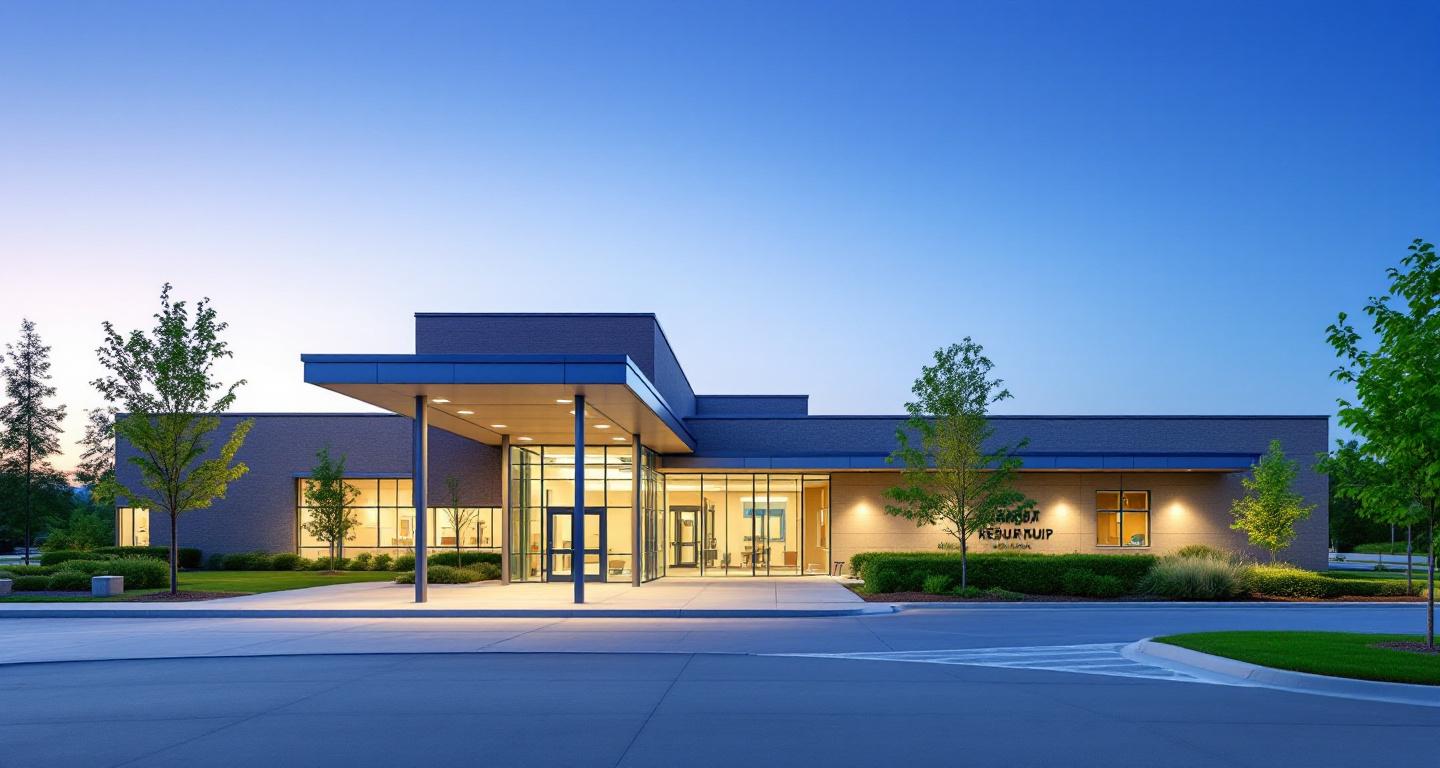 \n
\nAccredited facilities typically have welcoming, professional environments — look for CARF or Joint Commission credentials.
\n4. Cognitive Behavioral Therapy (CBT)
CBT helps patients identify and change thought patterns that drive substance use. Meta-analyses show CBT reduces relapse rates by 25-50% compared to no therapy (NIDA). Almost every quality program uses CBT — if a facility cannot describe how they apply CBT, that's a red flag.
5. Dialectical Behavior Therapy (DBT)
DBT is particularly effective for patients with co-occurring borderline personality disorder, suicidal ideation, or severe emotional dysregulation. Originally developed for BPD, it now has strong evidence for substance use treatment.
6. Motivational Interviewing (MI)
MI is a counseling style that helps patients resolve ambivalence about change. It's particularly effective in early treatment when motivation is fragile. Ask: "Do your counselors use motivational interviewing techniques?"
7. Medication-Assisted Treatment (MAT)
For opioid and alcohol use disorders, FDA-approved medications (buprenorphine, naltrexone, methadone, acamprosate, disulfiram) reduce relapse and overdose deaths by approximately 50% (SAMHSA, 2023). Programs that refuse to offer MAT for opioid addiction are not following clinical best practices. Search MAT-providing facilities for opioid recovery.
How Much Will Treatment Cost and Will Insurance Cover It?
Outpatient: $1,400-$10,000. Residential: $5,000-$80,000+ for 30 days. Most insurance covers a significant portion under the Mental Health Parity Act.
8. Insurance Verification
Before admission, the facility should verify your specific insurance plan and provide a written estimate of out-of-pocket costs. Ask three questions:
- Are you in-network with my plan? In-network typically costs 30-60% less than out-of-network.
- What's my deductible and what counts toward it? Treatment may apply toward your annual deductible.
- Is pre-authorization required, and have you obtained it? Without pre-auth, claims may be denied.
9. Cost Transparency
Request a written cost breakdown. A reputable facility will provide this within 24 hours. Avoid programs that pressure you to commit before disclosing costs, or that ask for credit card information before insurance verification.
Who Will Provide Your Care?
10. Staff Credentials
Ask for the credentials of the people who will actually treat you — not just the medical director. Look for:
- LCSW (Licensed Clinical Social Worker) — therapy and case management
- LPC (Licensed Professional Counselor) — individual and group therapy
- CADC / LADC (Certified/Licensed Addiction Counselor) — addiction-specific counseling
- Board-certified addiction psychiatrist (ABAM or ABPN with addiction subspecialty) — medication management
- RN with addiction nursing certification — for medical detox programs
Programs with primarily uncredentialed peer counselors may be appropriate for some patients but should not be the only level of clinical care.
11. Staff-to-Patient Ratio
Quality residential programs typically maintain a 1:8 staff-to-patient ratio for clinical hours. Lower ratios (1:5 or better) usually indicate higher-end programs with more individualized attention. Higher ratios (1:15+) often correlate with lower outcomes.
What Happens After You Complete Treatment?
12. Aftercare Planning
Aftercare is what separates programs with lasting outcomes from those without. NIDA research shows facilities with structured discharge planning have 20-30% better long-term outcomes than those without. Before signing on, ask:
\n \n
\nIndividual therapy rooms are where most clinical work happens — ask about therapist qualifications and evidence-based methods.
\n- Will you create a written aftercare plan before discharge?
- Do you have an alumni program with regular meetings or check-ins?
- Will you coordinate with my outpatient provider, sober living facility, or 12-step sponsor?
- Do you have relationships with local outpatient programs for step-down care?
Red Flags: When to Walk Away
Beyond the 12-point checklist, certain patterns indicate a facility you should avoid:
- Guaranteed outcomes — No reputable provider promises specific success rates. Addiction is a chronic condition with variable outcomes.
- Pressure to commit immediately — Quality programs give you time to verify insurance, ask questions, and consider alternatives.
- Refusal to disclose costs — If they won't put numbers in writing, walk away.
- "Proprietary" or "secret" methods — Effective treatment uses evidence-based methods that are publicly described in clinical literature.
- No medical detox protocol for alcohol/benzo dependence — These withdrawals can be fatal without medical supervision.
- Refusal to use FDA-approved medications for opioid addiction (this contradicts SAMHSA and ASAM guidelines).
Frequently Asked Questions
How long does it take to choose a rehab center?
For most people, the evaluation process takes 2-7 days. Use the first 1-2 days to identify 3-5 candidate facilities through SAMHSA's locator or our directory. Spend the next 2-3 days on phone consultations and insurance verification. By day 5-7, you should be ready to commit and schedule admission.
Should I choose a facility close to home or far away?
There's no one-size-fits-all answer. Closer facilities make family involvement easier and ease transition to outpatient care after discharge. Farther facilities provide distance from triggering environments and may be necessary if local options have waiting lists or are inappropriate for your needs. For severe addiction with strong local triggers, distance often helps. For first-time treatment with strong family support, local is often better.
How do I evaluate luxury vs standard rehab?
Luxury rehabs cost $30,000-$80,000+ for 30 days and typically offer private rooms, gourmet meals, and recreational amenities. The clinical effectiveness is generally similar to standard programs — the differentiator is comfort, not outcomes. If insurance covers a standard program but not luxury, the standard program is usually the better clinical choice. Pay extra only if amenities materially affect your willingness to complete treatment.
Can I tour a rehab facility before committing?
Yes — and you should. Reputable facilities offer in-person or virtual tours. During the tour, ask to see treatment areas (group rooms, individual offices), residential spaces if applicable, and meet with at least one clinician. Note: facilities may restrict access to active patient areas for confidentiality reasons (this is normal, not a red flag).
What if my first choice isn't available immediately?
Wait times for residential beds can range from same-day to 4 weeks depending on facility and insurance. Options if your top choice has a waitlist: (1) accept your second-choice facility for immediate admission; (2) start with outpatient care while waiting; (3) ask about emergency admission if you're at acute risk. Don't delay treatment indefinitely waiting for a "perfect" facility.
How do I know if a facility is right for my specific addiction?
Match facility specialization to your primary substance. Most facilities treat all substance use disorders, but some specialize in opioids (look for MAT availability), alcohol (medical detox capability), or co-occurring mental health (dual-diagnosis programs). Ask: "What percentage of your patients have my primary substance use issue?" If less than 20%, consider a more specialized facility.
Next Steps
Use this checklist to evaluate 2-3 facilities before committing. Search our directory of 21,000+ SAMHSA-verified treatment centers, browse by state to find centers near you, or call our free 24/7 helpline for personalized guidance. A trained specialist will verify your insurance and recommend programs that match your needs.